

IdeaMensch was never a high-revenue business. Six figures, at best. Never life-changing money. But the margins are high because the costs were almost zero. No employees. No office. Hosting and a domain name. No VC would ever be interested in it.
That’s why it worked as a slow bet. Not because it made a lot of money. Because almost everything it made was profit.
I spent years working with startups and VC-funded companies. The playbook was always the same. Grow users. Raise more money. Grow more users. Worry about profit later. Later never came.
Most of these companies were burning cash trying to hit some magic number that would unlock the next round of funding or an acquisition. The math only works if there’s an exit. Most startups never have one. So you’ve got founders who spent five, seven, ten years maximizing growth without ever making a dollar in profit. When the music stops, there’s little left. It’s a game where some win big and most lose.
I watched this cycle over and over. Smart people building impressive-looking businesses that couldn’t survive without the next injection of someone else’s money. Revenue in the millions sometimes. Profit: zero. Or negative.
IdeaMensch was the opposite. Tiny revenue. Great margins. Nobody’s writing about it on Twitter, which I will not call X until Elon follows me on here.
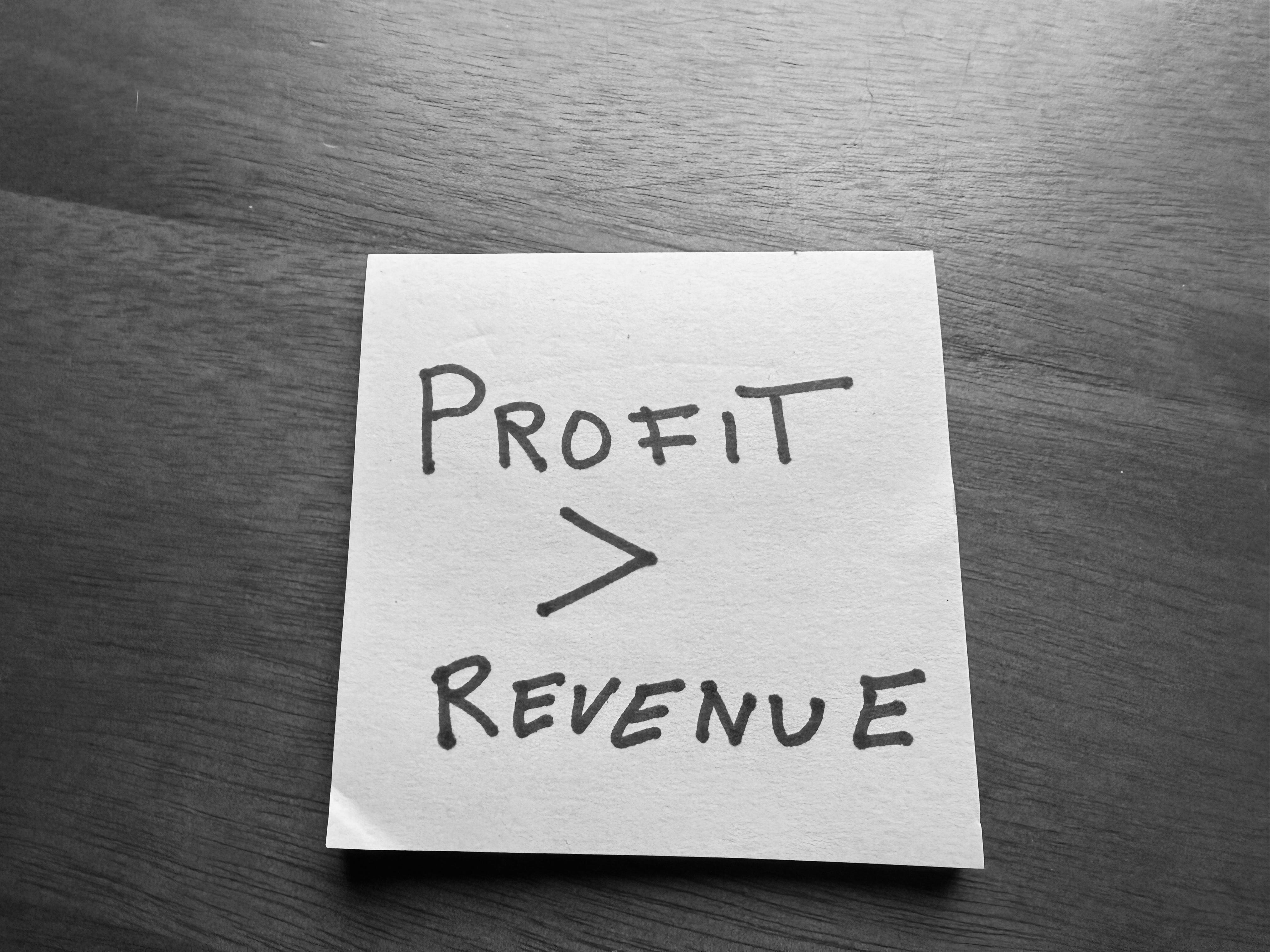
Revenue is vanity. Profit is sanity. I didn’t make that up, but I’ve lived it. When people ask me what IdeaMensch does in revenue, I redirect the question. What matters is what’s left after costs. That’s the number that gets reinvested. That’s the number that spins the flywheel.
The same logic applies to your career. A $200K salary in LA with $180K in living expenses gives you less fuel for slow bets than a $120K salary in Iowa with $60K in expenses. The profit margin on your life matters more than the top line.
Consulting works the same way. No building. No staff. Just your computer and some time. The margins are almost pure profit. Not glamorous. Won’t get you on a podcast. But everyone chasing venture-scale businesses isn’t looking at it. Less competition. It’s a great first slow bet for most people, as you build with just your time.
If your side project or investment isn’t producing actual profit, money you can reinvest, it’s not a slow bet yet. It’s a stressful hobby with revenue.
Optimize for what’s left over.
That’s the only number that compounds.