

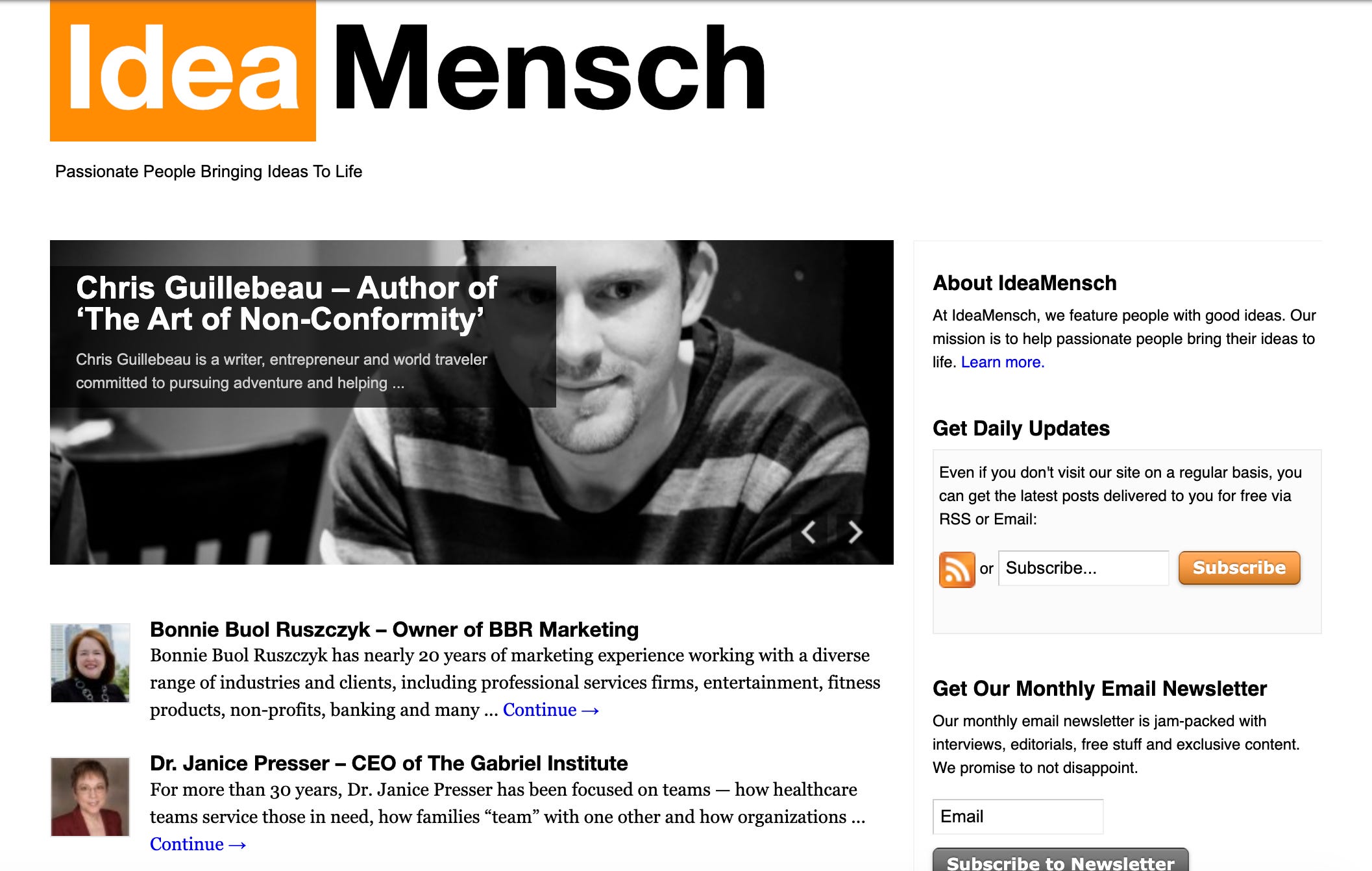
In 2009, I launched IdeaMensch. An interview site. One entrepreneur at a time. No revenue model. No audience. Just an idea, a WordPress site, and a Google Form.
Three years in, it made $100 a month. Not exactly life-changing.
Five years in, $1,000 a month. Still not quitting my day job.
Ten years in, it had grown into something real. No employees. No contractors. Mostly automated. I just didn’t quit something that didn’t need me to quit it.
I should say, it probably wouldn’t take that long today. Back then, I was writing code before I had any idea how to code. I still don’t know how to code. Everything took forever. With AI, the building part has gotten dramatically faster. But the compounding part hasn’t. That still takes years. The tools change. The patience doesn’t.
That’s a slow bet.
An investment of time, money, or attention with a longer feedback loop that compounds over time. Not passive. Not “set and forget.” You’re actively tending something that won’t pay off for years.
The compounding part matters. Early on, the growth is so small it feels like nothing. You’re stacking pennies. But compounding is back-loaded. The same forces that make year one feel pointless make year seven feel like a cheat code. Most people bail before the curve bends.
I’d been operating this way for most of my adult life without naming it. IdeaMensch. Small commercial real estate buys. Small companies that nobody wrote about on TechCrunch. Once I stopped treating it as a personal quirk and began treating it as an operating principle, the results no longer felt like luck. And most of them had almost no competition. Not many people want to wait five years for a payoff.
Not everything becomes a slow bet, though. I wrote a book about fighting parking tickets called Metered Success. I built a gear recommendation site showing what pro athletes use. Both went nowhere fast. No momentum. No signal that patience would change anything. Part of the skill is knowing when to quit. That’s a lesson I learned the hard way.
Most slow bets start as side projects. Mine did. I had a career the entire time. That was the advantage. I never needed to live off IdeaMensch, which meant every dollar it made could go right back in. Or into the next bet. When you’re not desperate for a slow bet to pay your rent, you can let it do what it does best. Grow.
IdeaMensch funded other slow bets. The first was a small commercial real estate investment. Then another. Then a few other small companies. Each one small enough to survive on its own. And when one started producing, it fed the next. That’s the thing about slow bets. They stack. The returns were never exponential. They were just consistently above average.
That adds up.